
Filed under: YouTube Tests & Guides
Updated October 6, 2026. Our September coverage discussed creators reporting sudden drops in reach. Those reports are a reason to investigate, not proof of a single platform-wide cause. This guide replaces a vague “views are down” diagnosis with a record of what changed on your own channel.
Start with a fair comparison
Compare the same format over the same elapsed time since publication. A one-day Short and a month-old long video are not interchangeable samples. Note the date range, number of uploads, topics and whether a previous unusually successful video makes the comparison look worse.
Record five useful observations
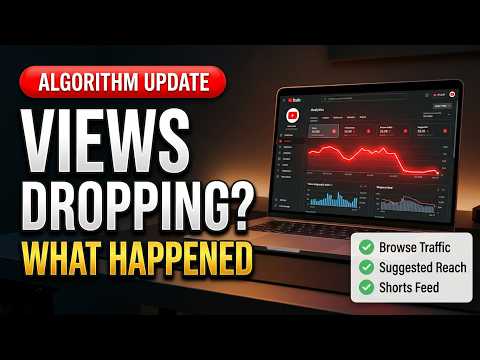
- Traffic source: identify whether the decline is in Browse, Suggested, Search, Shorts feed or external traffic.
- Exposure: for long videos, inspect impressions and their trend. Low exposure is a different problem from people seeing a thumbnail and not clicking.
- Choice: inspect CTR in context for long videos, or the relevant viewed-versus-swiped measure for Shorts. Do not use one format’s metric as another format’s diagnosis.
- Viewing: inspect retention and average view duration. Locate the first substantial departure and watch that exact passage.
- Audience: compare returning or active audience behavior with similar past uploads.
YouTube’s content-performance documentation explains the reports. An impression is a counted thumbnail exposure on supported YouTube surfaces, not every possible encounter with the video.
Turn the evidence into a next action
- Exposure changed, response held up: investigate topic interest, timing and traffic-source changes before blaming the thumbnail alone.
- Exposure continued, clicks fell: review the idea and packaging against what the video actually delivers.
- Clicks held up, early retention fell: inspect whether the opening delays or contradicts the promise.
These are working hypotheses, not automatic diagnoses. YouTube identifies topic interest, competition and seasonality as external factors that can affect reach in its recommendation guidance.
Use creator reports carefully
Ask whether reports share a date, format, traffic source and comparable symptoms. A collection of screenshots without those details cannot establish the cause. Record the official source if a platform explanation appears; otherwise leave the cause labeled unconfirmed.
Creator reports alone do not establish an outage or suppression. Without a documented platform-wide finding, treat the cause as unconfirmed and investigate the evidence available for your own channel.
Takeaway: document the changed metric, choose one justified action and review the result. See the companion evidence-log checklist for a compact record you can use before changing anything.
Prefer to watch the demonstration?
The written article above contains the essential answer. The public video is available as an optional walkthrough.