
Filed under: YouTube Tests & Guides
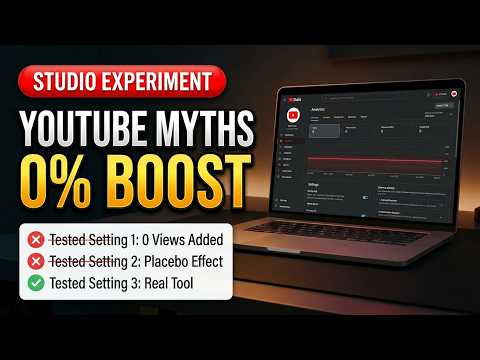
Updated October 6, 2026. We examined four popular promises about YouTube settings. The distinction is between a real control and a claim that the control guarantees more views. Opening a setting confirms that it exists; it does not establish a causal effect on recommendations.
The four claims and the evidence
- Subscriber notifications suppress a small channel: misleading as a blanket explanation. Disabling “Publish to subscriptions feed and notify subscribers” also removes that upload from subscribers’ feeds, according to YouTube’s notification documentation. That is a real consequence, not proof of a universal growth advantage.
- Home-tab content toggles make videos viral: false. These controls arrange the content on the channel page. They do not document a command to force recommendations. See channel layout guidance.
- Feature eligibility unlocks useful tools: true with limits. Access to features is not a guaranteed distribution boost. YouTube’s access guide explains verification and channel-history requirements.
- Automatic dubbing guarantees rankings, impressions or views: misleading. Dubbing supplies translated audio and can serve other-language viewers. Quality and eligibility matter; a growth guarantee does not follow. Read the official dubbing guide.
What our check can establish
The original investigation matched the claims to the relevant interface and documentation. It did not randomly divide equivalent uploads into controlled groups or isolate one setting while everything else stayed constant. Consequently, the result is a fact-check of the promises, not a measured algorithm experiment.
A video improving after a setting change can still have a different topic, title, thumbnail, opening or audience. If several factors changed, a before-and-after screenshot cannot identify which one caused the result.
A practical claim-checking worksheet
- Write the exact promise, including whether it says “can,” “will” or “guaranteed.”
- Identify the named setting and what it actually changes.
- Find the official explanation and record its date and eligibility limits.
- Ask what evidence connects the setting to the claimed outcome.
- List other changes that occurred between the example uploads.
For example, translated audio reaching international viewers is a plausible benefit. It is different from a promise that switching dubbing on forces the system to rank every video higher.
What to do instead of chasing switches
Examine the specific upload: whether viewers received impressions, whether they clicked and where they stopped watching. Then decide which part of the idea or presentation can be improved. A setting should solve an operational need—such as localization or access to a tool—rather than become an explanation for every reach problem.
Verdict: mixed claims, no magic switch. Use the tools that serve your audience, and demand stronger evidence when advice promises an automatic performance result.
Prefer to watch the demonstration?
The written article above contains the essential answer. The public video is available as an optional walkthrough.